CASE STUDY
Alchemist Candle Company
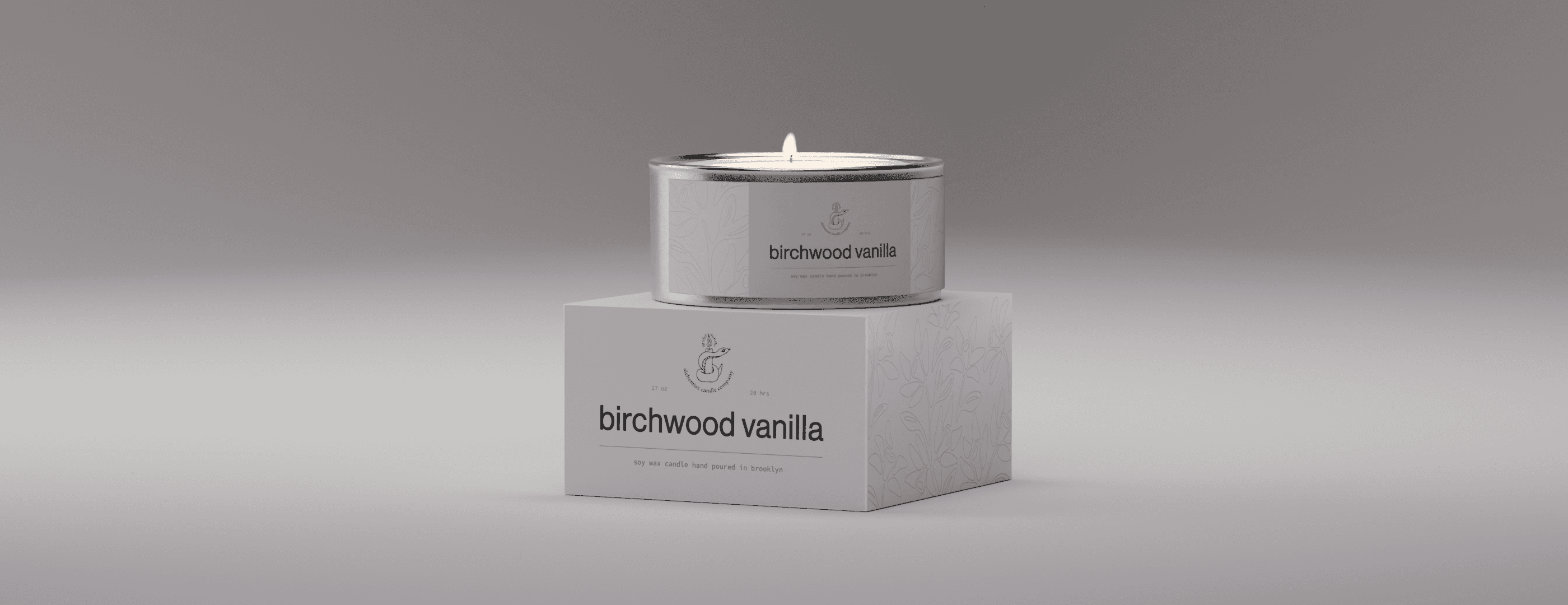
Established in 2020 by Danni Ma, Alchemist Candle Company is an eco-conscious fragrance brand born from a cross-continent journey between Brooklyn and China. Rooted in the philosophy of alchemy, the brand needed an identity that reflected its handmade craft without blending into a saturated market of minimalist candles. I had to build a complete brand system from scratch while physical manufacturing specifications were entirely uncertain. My solution was a scalable design architecture.
Scope
Logo
Brand Identity System
Packaging Design
3D Renders.
Tools
Procreate
Adobe Illustrator
Adobe Photoshop
Blender
Role
2 Week Timeline
Visual Designer
Contract
RESEARCH
Discovery & Visual Direction
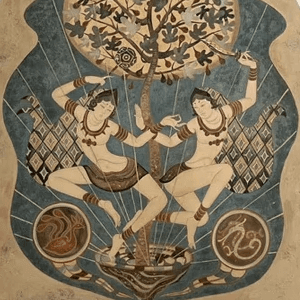
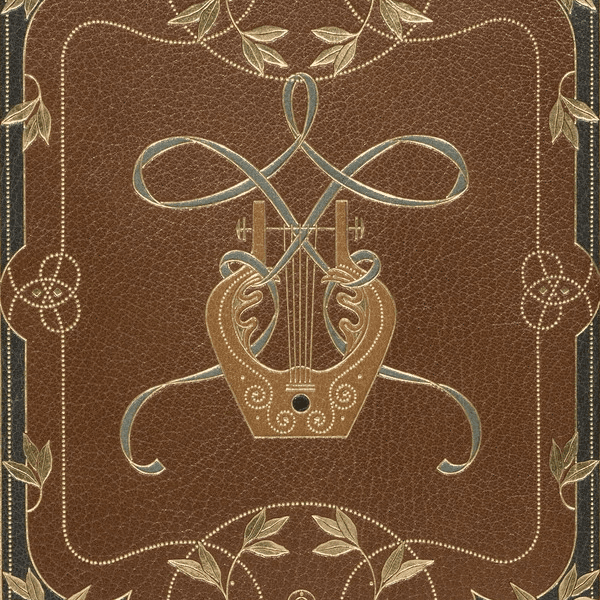
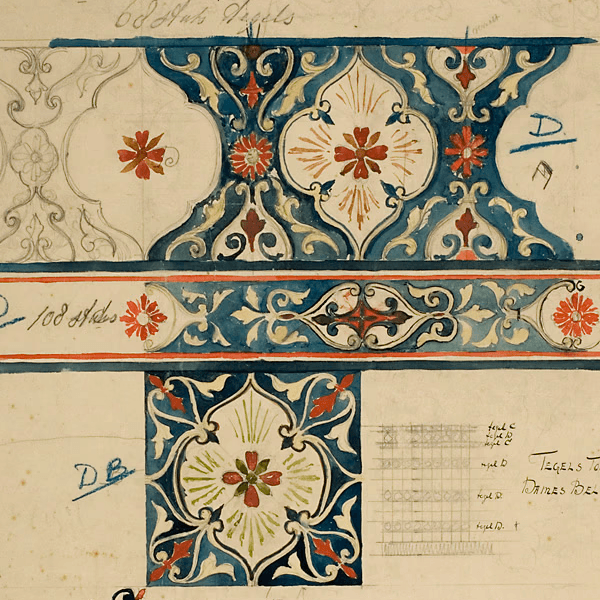
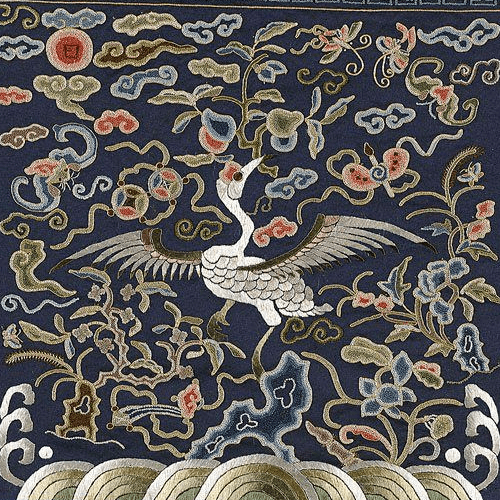
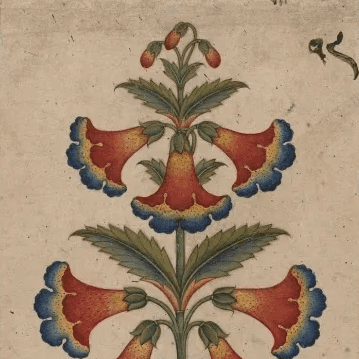
Danni Ma is a self-taught candle maker who honed her craft alongside vendors at the Brooklyn Flea Market. But when she relocated to China, she needed a comprehensive identity system from scratch, a logo, packaging architecture, and 3D visualization despite having unfinalized physical production specs. Because we were collaborating remotely across continents, establishing a clear visual vocabulary early was critical. We built a collaborative mood board to pin down her exact aesthetic goals. Danni wanted to merge the rich, hand-drawn character of manuscripts with the functional clarity of contemporary minimalism.
Key Takeaways
Symmetrical compositions & mirrored designs
Layered detail within defined spaces
Ornate borders and frames
Botanical motifs & repeating patterns
Rich, aged color palettes
Dimensional flatness typical of medieval art

RESEARCH
Market Context & Research
The artisanal candle space is saturated with brands competing on natural ingredients and eco-conscious messaging. Most often default to the same visual approach. This creates a crowded market where brands become visually interchangeable. Below are a few hand picked examples.

Los Angeles, California
Kraft paper label with a condensed (borderline illegible) sans-serif typography
Little variation in type hierarchy (scent name and details given equal weight)
Amber glass jar (warm, natural association)
Brooklyn Candle Studio
Brooklyn, New York
White minimalist label with serif scent name, sans-serif details
Large white label dominates the jar. High contrast but impersonal
Clean but generic. Could be mistaken for any wellness/home goods brand
Boy Smells Candles
Los Angeles, California
Color-blocked label (pinkish purple) with tight leading, caps typography
Black glass creates contrast but loses transparency/material quality
Contemporary but relies heavily on color blocking for differentiation
Synthesis
Design Challenge
Problem 1
Artsy, city-based candle brands use minimalism without distinguishing features. Not much brand personality. Every brand looks identical because they rely solely on typography and whitespace.
Problem 2
Tin sizing and box dimensions weren't finalized post design phase. The system needed flexibility to accommodate specification changes without requiring complete redesigns.
Approach
Separate by Function: Isolate decorative elements to specific brand touchpoints (logo, patterns) while keeping functional elements adaptable. What creates personality stays fixed and what needs flexibility varies.
IDEATION
Branding
Brand Mark
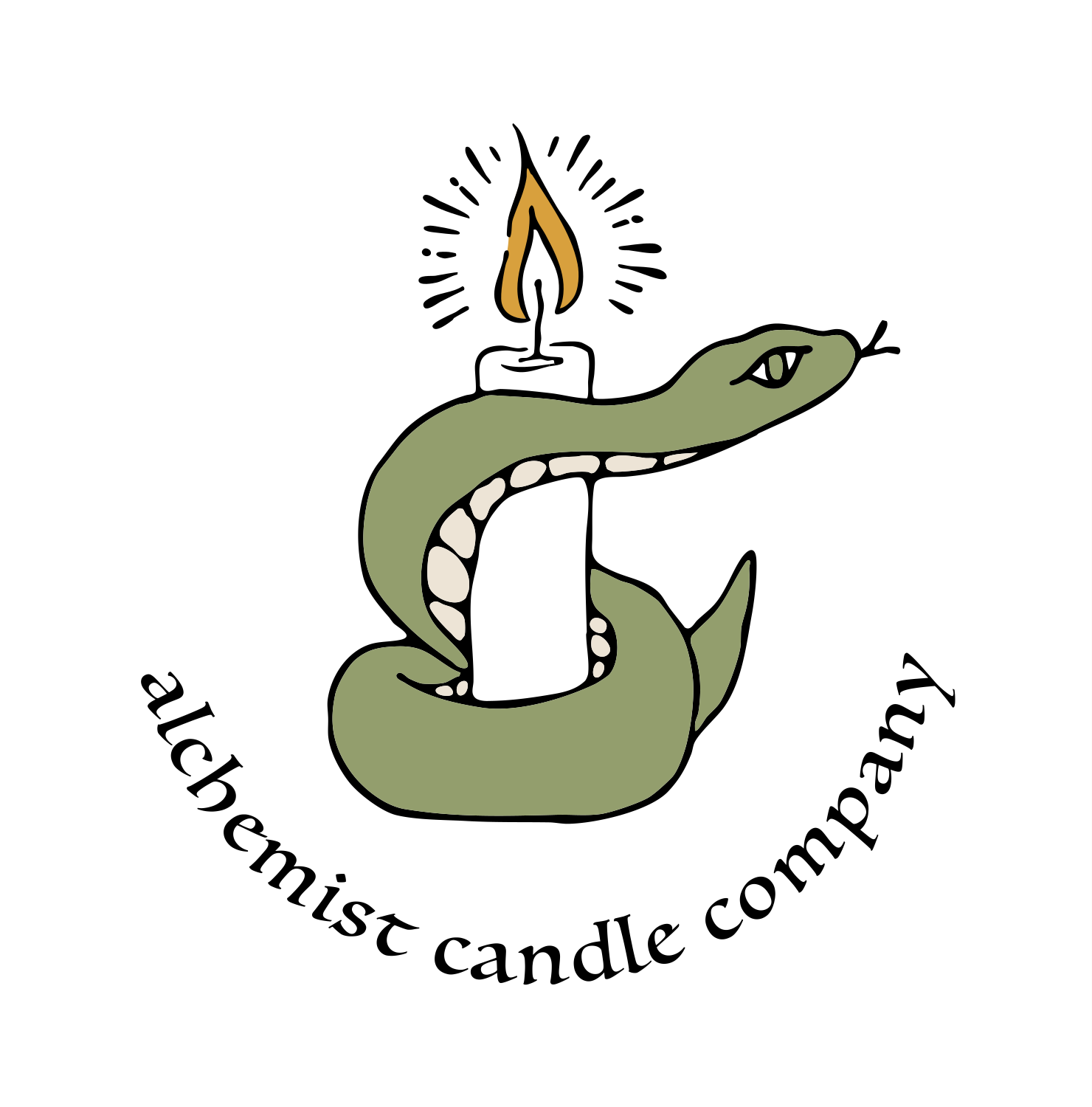
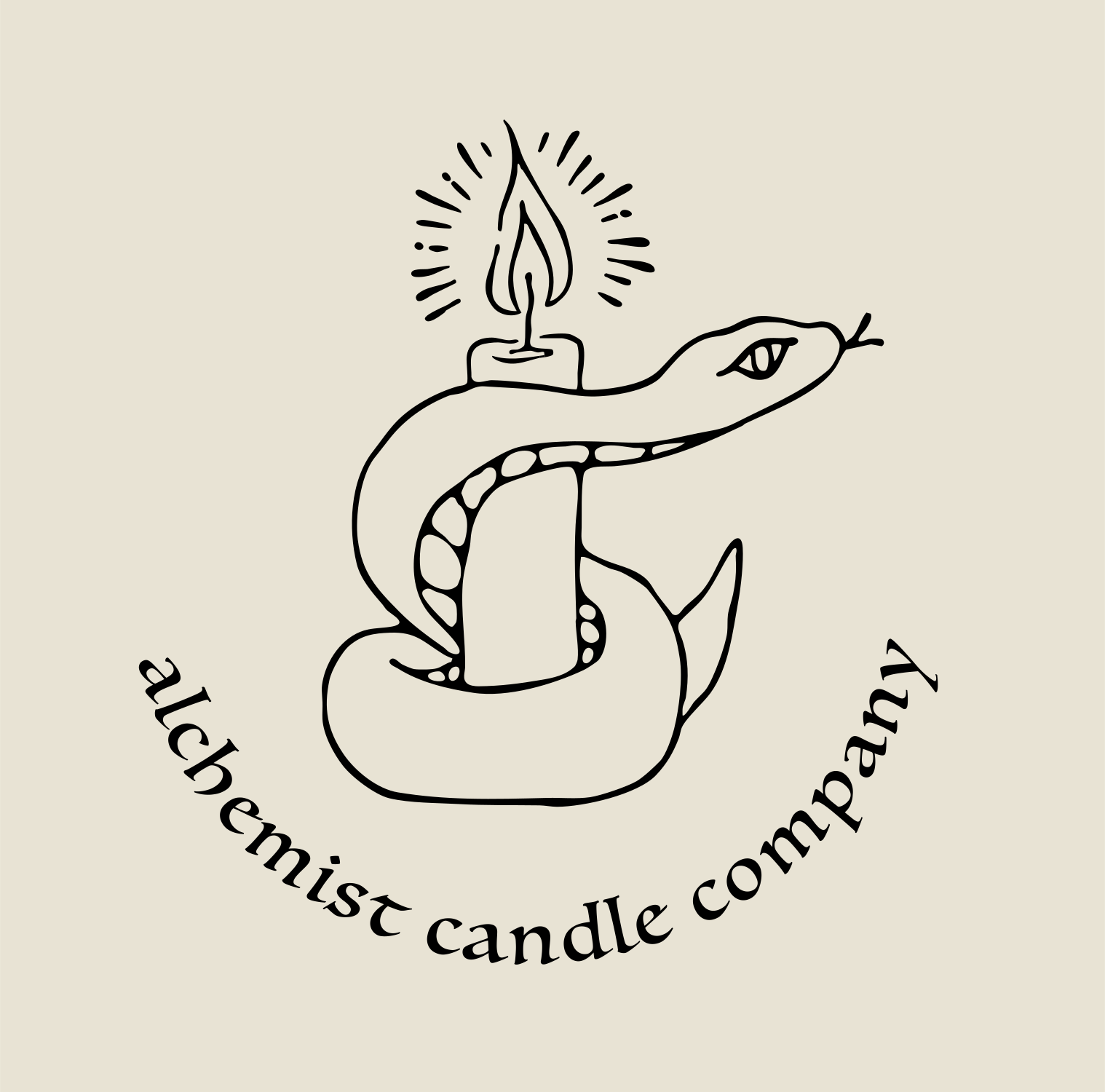
After illustrating several concepts in Procreate, the serpent and candle design was selected as it looks as though it would be something you'd find on a shopkeepers crest from the time period. To reinforce this medieval manuscript feel, the hand drawn mark is paired with the Luminari typeface, which also serves as a bounding box / container for the logo. The entire centerpiece is then grounded by an earthy color palette of muted green, rich gold, and soft cream.
Brand Mark Palette
939E6D
EDE4D5
D8A03D
FFFFFF
Typography
Brand Mark Use Only: Luminari, Regular

Heading: Neue Haas Grotesk Display Pro, Medium

Paragraph: Source Code Variable, Regular

IDEATION
Packaging & Labeling
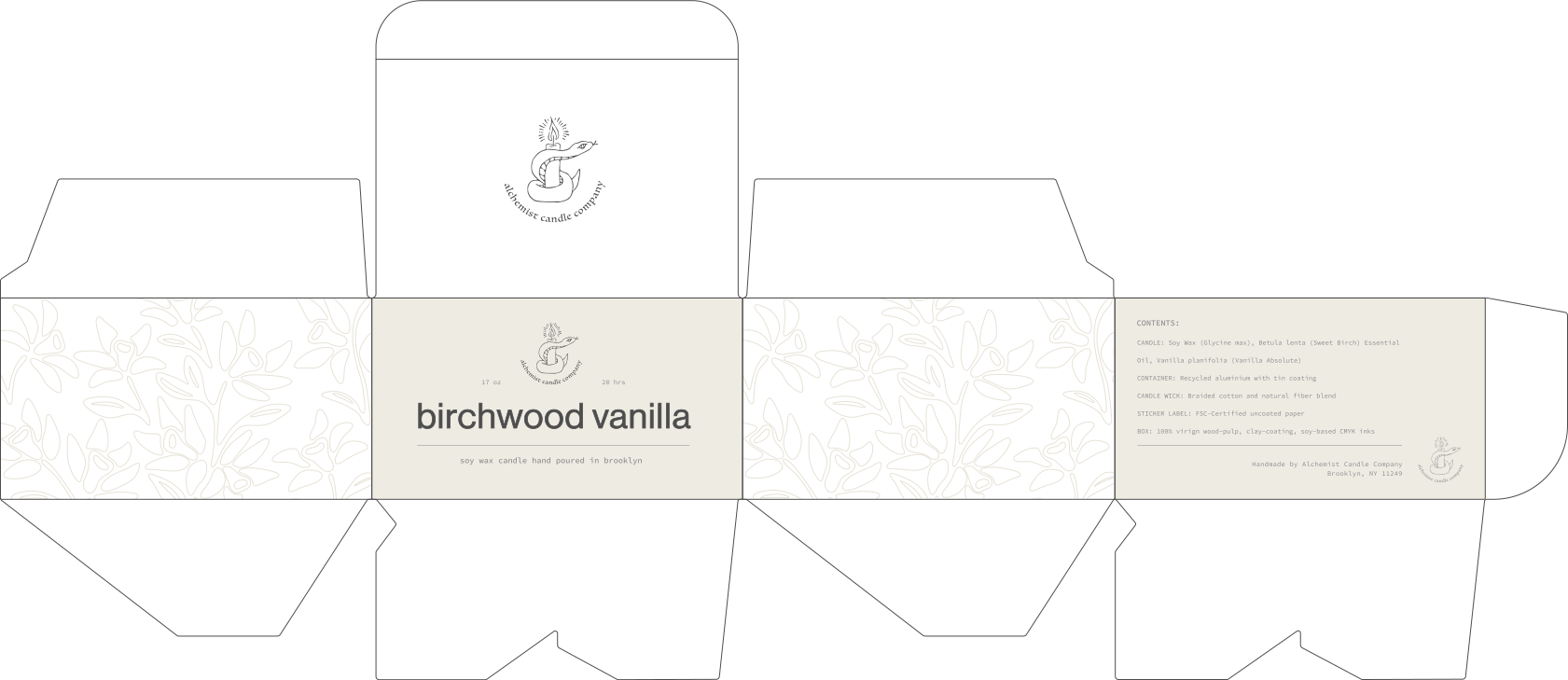
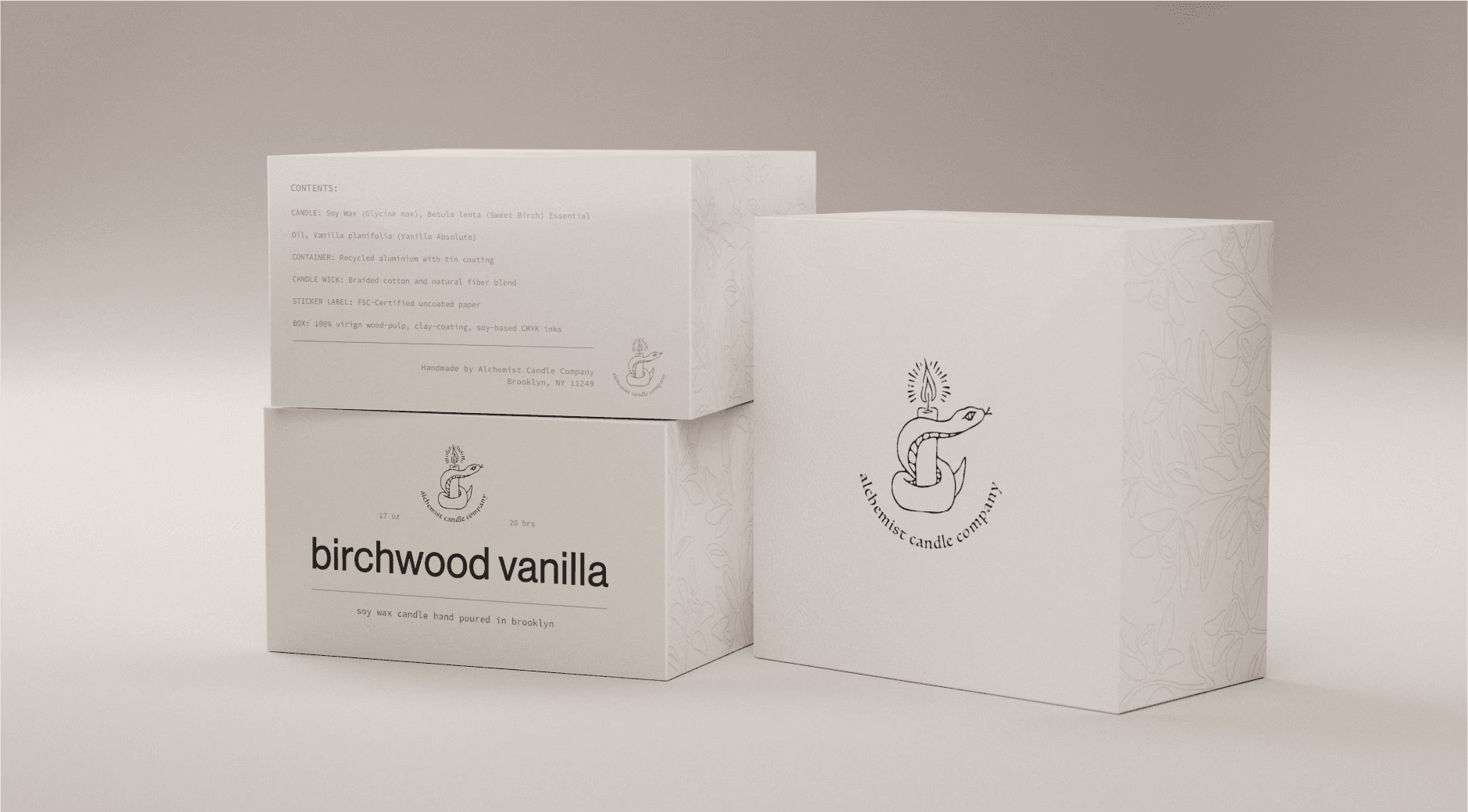
Both packaging structures make for a modular and scalable design system. To identify scents at a glance without cluttering the design, I illustrated a botanical pattern that fill the side panels of both packaging pieces. This placement leaves the center panel clean and functional, ensuring essential typography is easily scannable while maintaining a cohesive, premium unboxing experience.

IDEATION
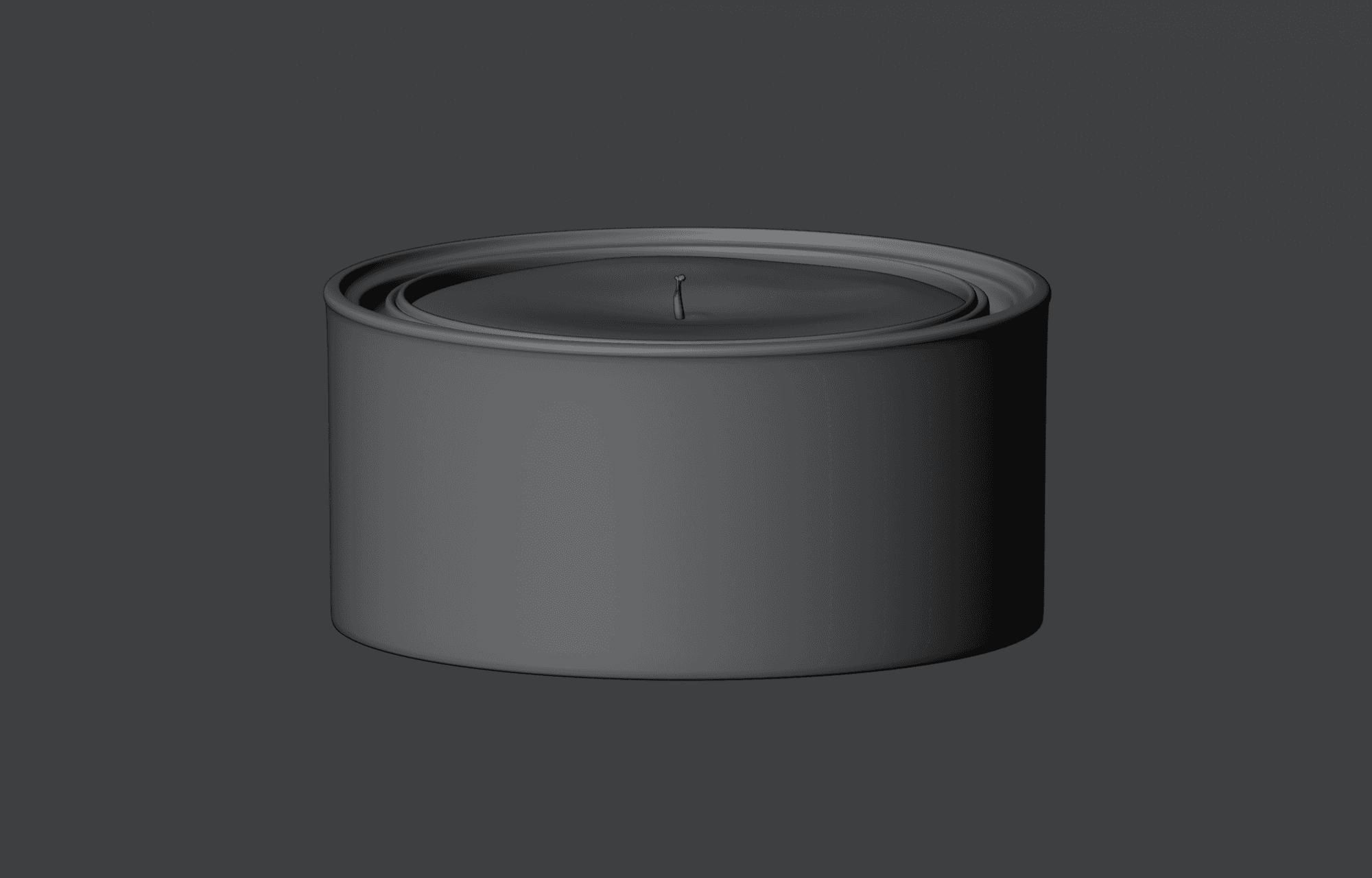
Candle 3D Model
Lorem
IDEATION
Candle Box 3D Model
Lorem
Ideation
Staging, Lighting & Environment
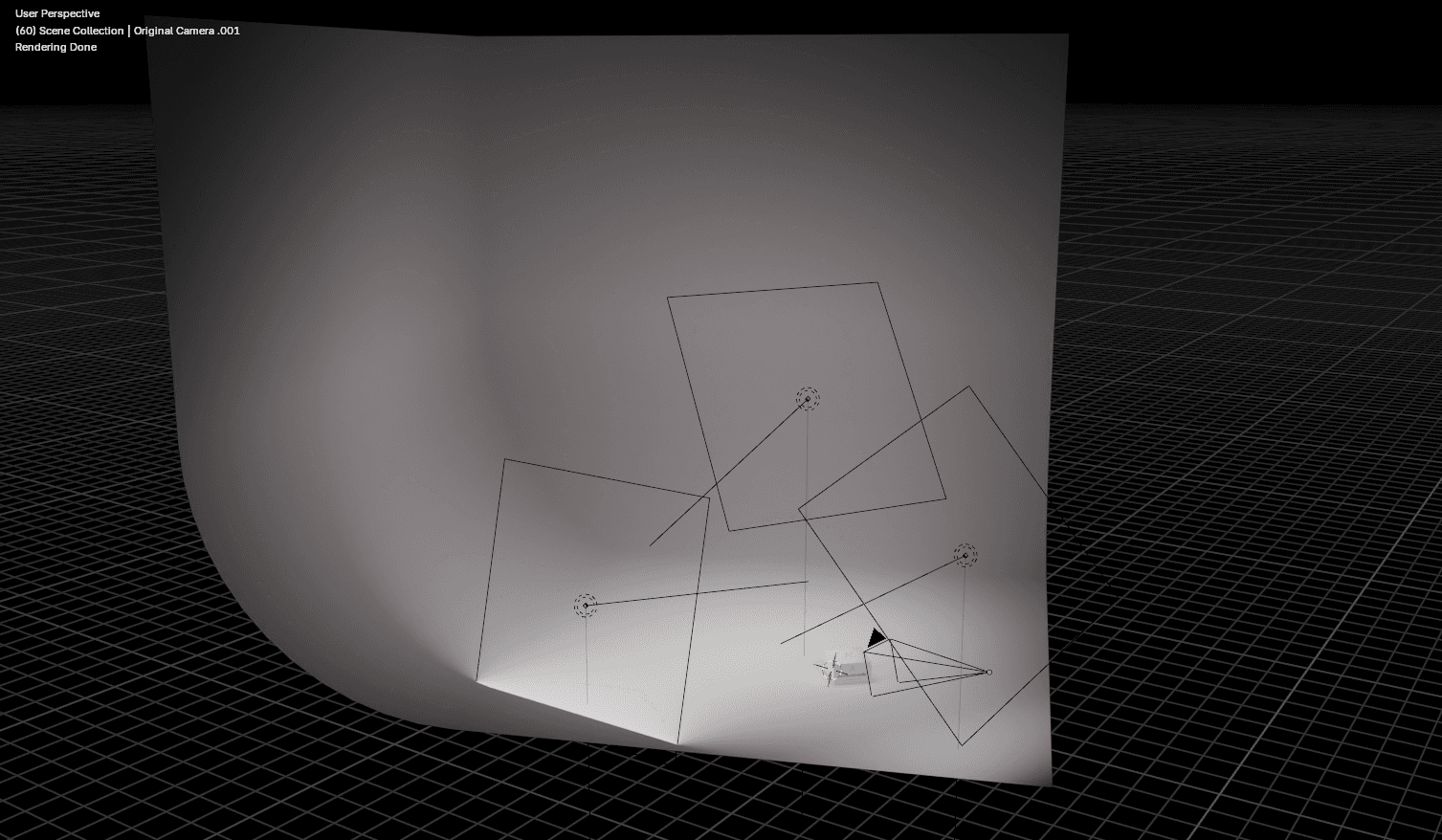
Studio Scene
For the studio shots, I set up a three point lighting system, a key light for main illumination, fill light for softening shadows and a rim light for edge definition. I also added some subtle volumetric lighting.
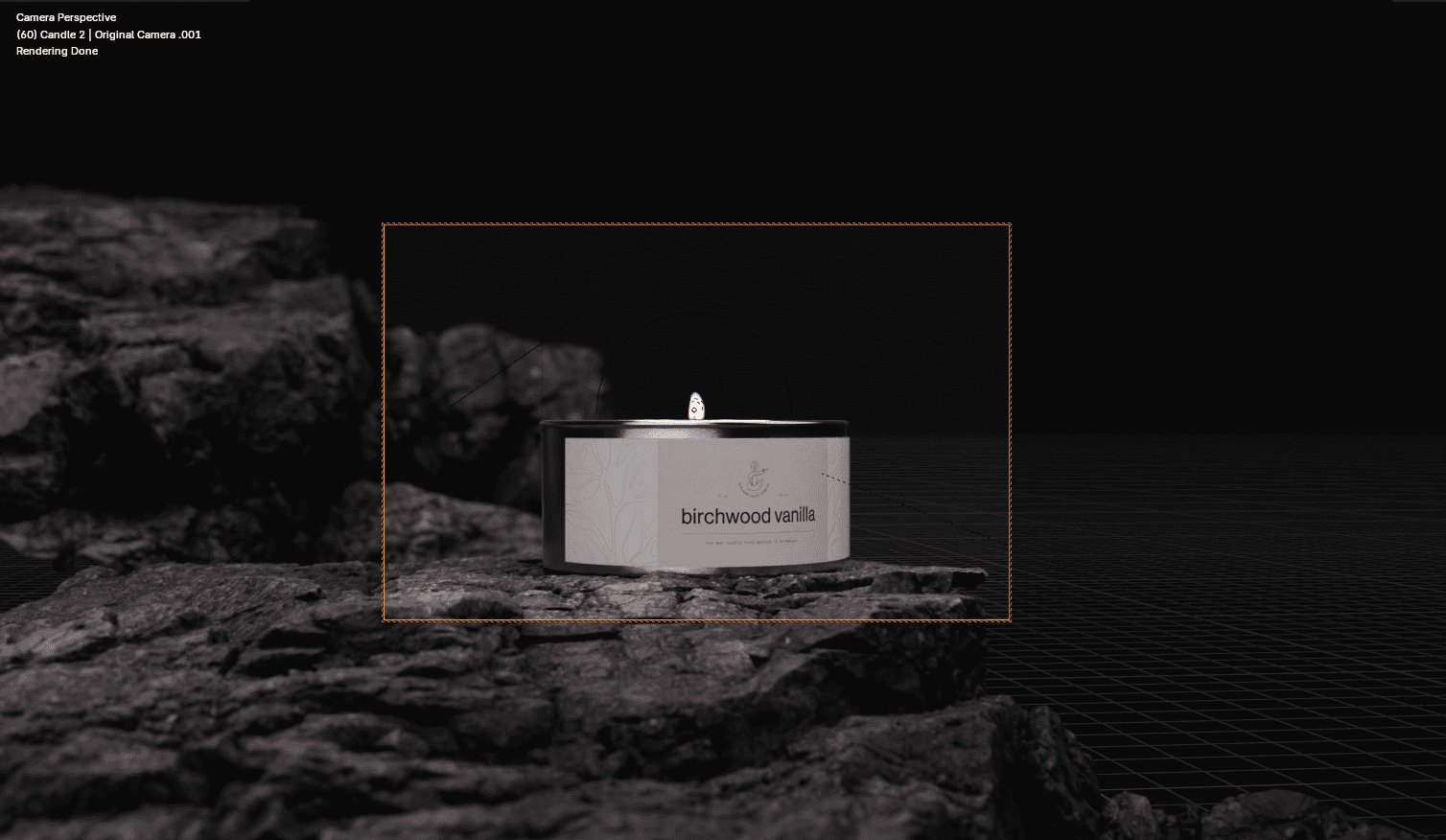
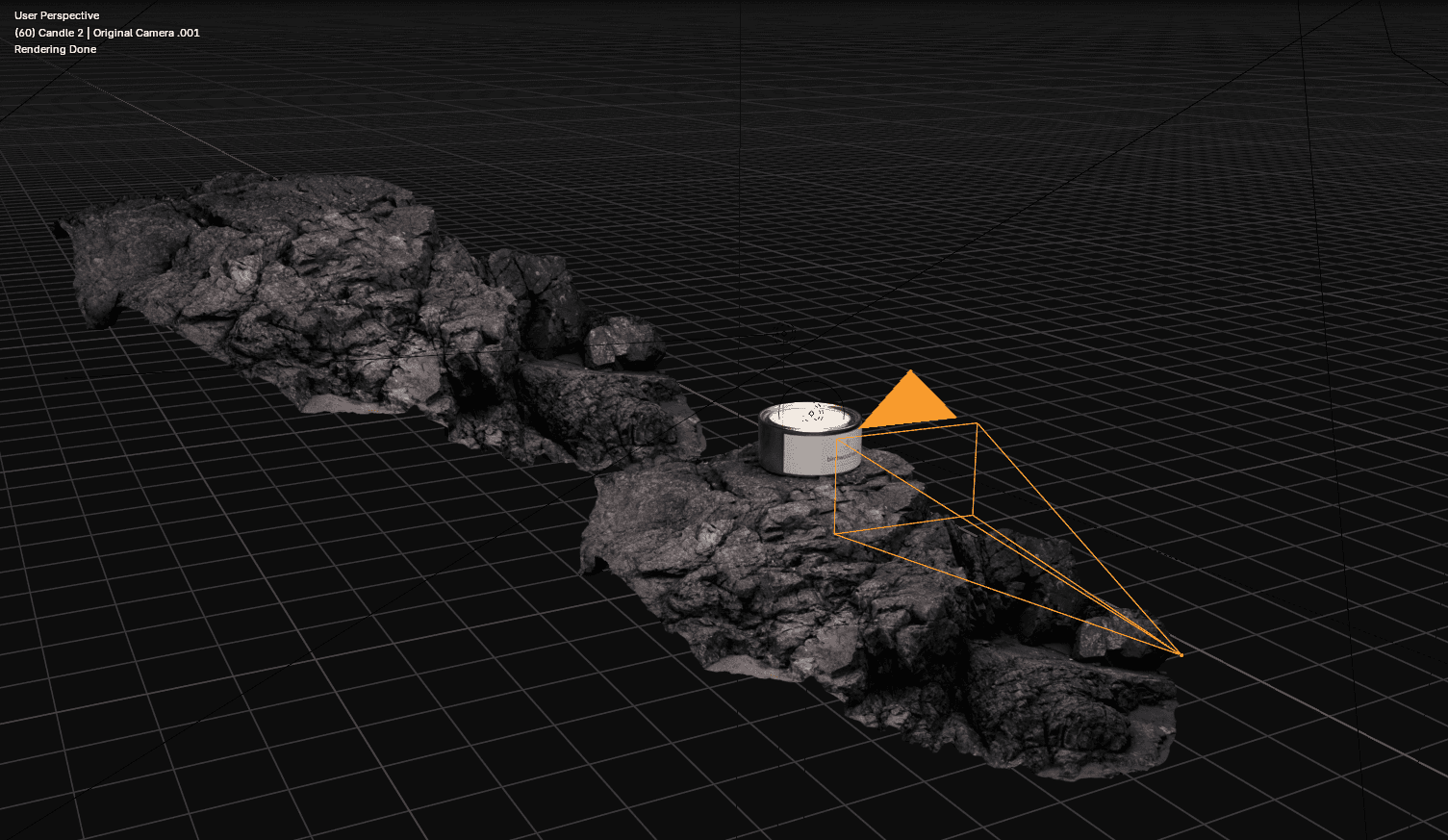
Environmental Scene
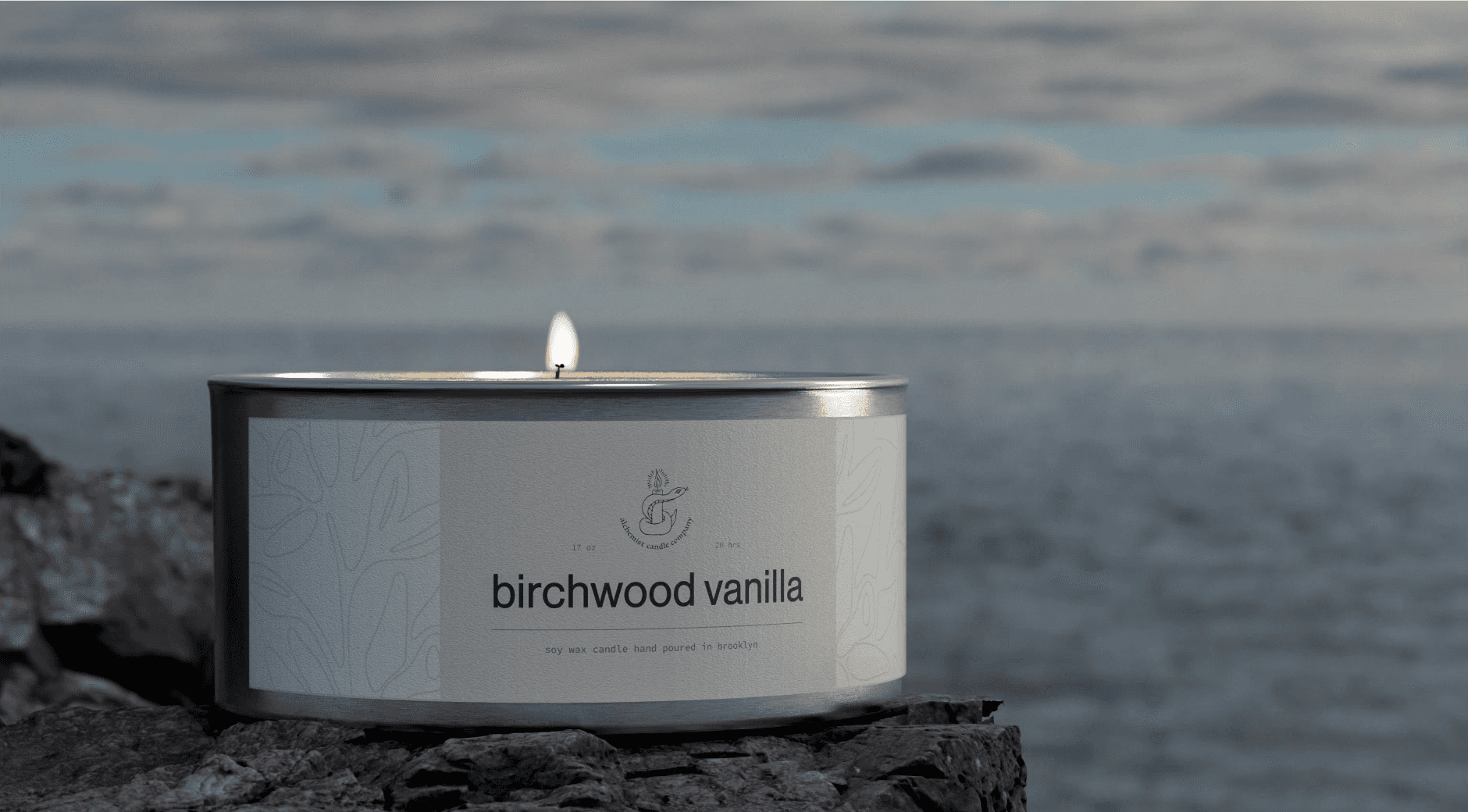
For environment shots, I wanted to show the product in a visual context that reinforced the brand's naturalistic quality. I used a photogrammetry asset of a rocky oceanfront cliff, used forced perspective via the depth of field to create the illusion that the rock sizes were bigger than they were in the software.
DESIGN SOLUTION
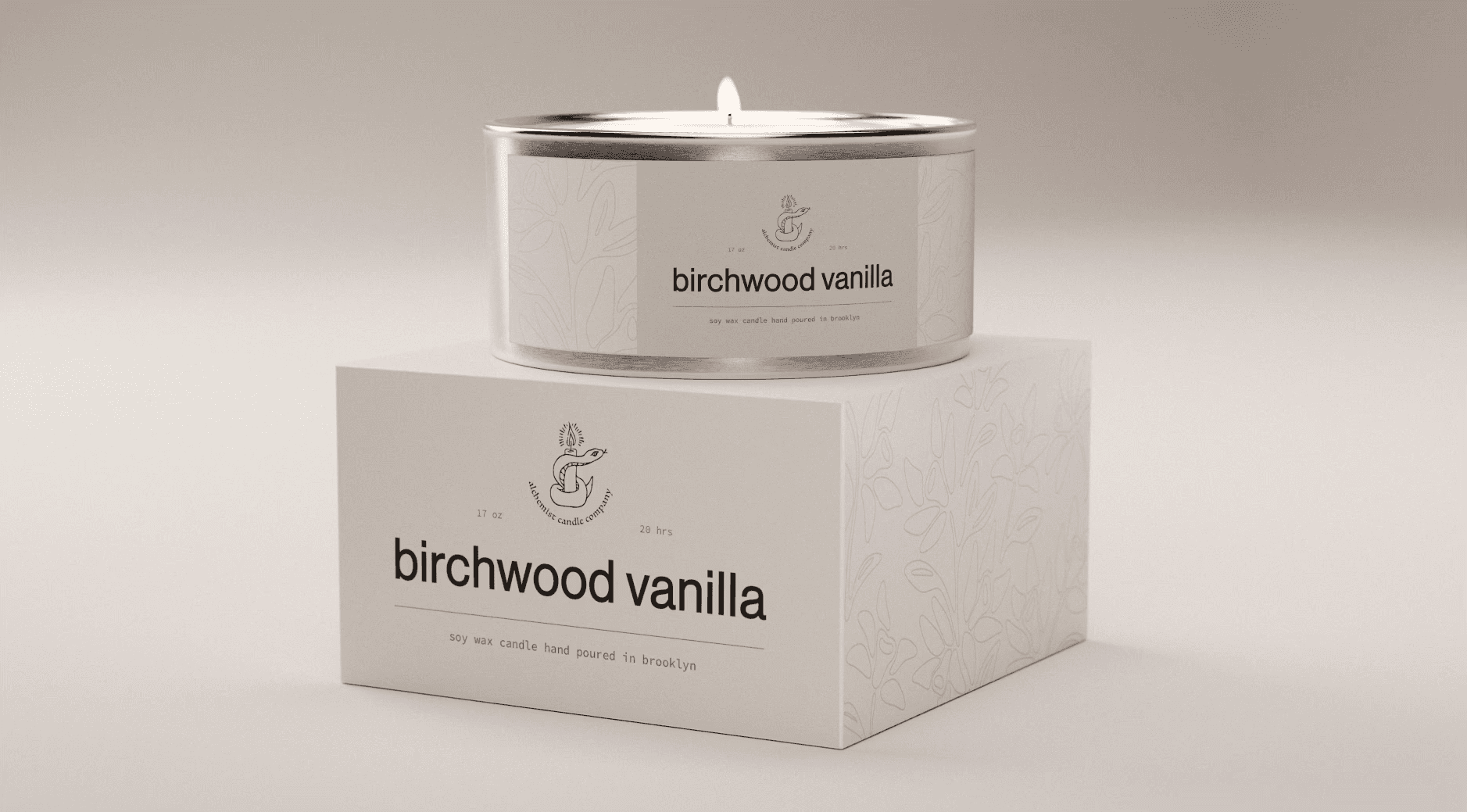
Final Mockup Renders
The final deliverable is a complete and new brand identity system that bridges medieval ornamental design with contemporary function. The serpent logo and botanical patterns carry the brand's personality, while clean typography and modern elements ensure product information remains modern and accessible.
RESULTS
Reflection
This project reinforced the importance of clearly defining aesthetic boundaries before designing. By breaking down the characteristics of the detailed and minimal design languages early on, I established guidelines that helped with every design step. Because I couldn't rely on quick check-ins or in-person presentations, I was forced to think more strategically about why each choice mattered, which ultimately made the work stronger. Furthermore, beautiful concepts don't matter if they can't be produced accurately or cost-effectively. Building production considerations into the design process from the start prevented costly revisions later.